
Electrical distribution systems depend on reliable equipment to control, protect and isolate power circuits. Industrial facilities, commercial buildings, manufacturing plants and utility networks all require equipment that can handle specific voltage levels and operating conditions. Choosing suitable switch gear products involves understanding their construction, protection features, installation requirements and maintenance needs. A well-planned switchgear arrangement helps prevent electrical faults from spreading, supports safe equipment operation and reduces the risk of unexpected power interruptions.
What Are Switch Gear Products?
Switchgear refers to a group of electrical devices used to control, protect and isolate electrical circuits. These devices include circuit breakers, disconnectors, fuses, protective relays, earthing switches and control panels. Together, they help manage the flow of electricity from power sources to distribution networks and end-use equipment.
Switchgear is designed to respond to abnormal electrical conditions, including short circuits, overloads and earth faults. When a fault occurs, protective devices detect the problem and disconnect the affected circuit. This action helps protect cables, transformers, motors and other connected equipment from damage.
Switchgear installations are available in different designs and voltage ratings. The correct arrangement depends on the electrical load, available space, environmental conditions and safety requirements of the facility.
Common Types of Switchgear Used in Electrical Networks
Different electrical applications require different switchgear configurations. Engineers consider voltage levels, fault current ratings, operating conditions and installation environments before selecting equipment.
Low-Voltage Switchgear
Low-voltage switchgear generally operates at voltages up to 1,000 V AC. It is widely used in commercial buildings, factories, data centres and industrial facilities.
Typical components include:
- Air circuit breakers
- Moulded case circuit breakers
- Miniature circuit breakers
- Protective relays
- Busbars and distribution assemblies
These components help distribute electricity to different sections of a facility while providing protection against electrical faults. Low-voltage switchgear is commonly installed in main distribution boards, motor control centres and power distribution panels.
Medium-Voltage Switchgear
Medium-voltage switchgear is used in electrical networks that operate above 1 kV and generally up to 36 kV, although equipment classifications and applicable standards may vary by region.
It is commonly found in substations, industrial plants, commercial complexes and utility distribution networks. Circuit breakers, disconnectors, current transformers and voltage transformers work together to control and monitor power distribution.
Medium-voltage installations require careful insulation coordination, appropriate fault ratings and reliable protection systems. Their design must also account for operating conditions and the maintenance requirements of the installation.
High-Voltage Switchgear
High-voltage switchgear is designed for transmission networks and large electrical substations. It manages power at voltage levels above typical medium-voltage distribution systems.
Common equipment includes circuit breakers, isolators, earthing switches, instrument transformers and surge arresters. These installations require specialised insulation arrangements and clearances to handle high electrical stresses.
High-voltage switchgear is particularly important in power generation facilities, transmission substations and large utility networks.
How Switchgear Systems Support Electrical Distribution
Modern electrical infrastructure requires coordinated equipment that can manage power flow and respond to faults. Switch gear systems combine switching devices, protection mechanisms, monitoring equipment and control arrangements to perform these functions.
Their responsibilities extend beyond simply connecting or disconnecting electrical circuits.
Some of their main functions include:
1. Fault protection: Circuit breakers interrupt current during short circuits and other abnormal conditions. Protective relays identify faults and initiate the required switching action.
2. Circuit isolation: Disconnectors and earthing switches allow electrical equipment to be isolated for inspection, repairs and maintenance.
3. Load management: Switching arrangements help operators control the distribution of electrical power across different circuits and equipment.
4. Equipment protection: Properly coordinated protection systems reduce the likelihood of damage to transformers, motors, cables and other electrical assets.
5. Operational monitoring: Modern switchgear may include sensors, communication interfaces and monitoring devices that provide information about equipment conditions.
These functions help electrical operators maintain controlled and predictable distribution across complex networks.
Why Gas-Insulated Technology Is Used in Medium-Voltage Installations
Space limitations, environmental conditions and installation requirements influence the choice of insulation technology. Traditional air-insulated equipment uses air as its primary insulating medium, while gas-insulated designs enclose live components within sealed compartments containing an insulating gas.
Medium voltage gas insulated switchgear is commonly selected for substations, industrial facilities and buildings where compact equipment arrangements are beneficial.
Its main characteristics include:
- Compact construction: Enclosed live components allow manufacturers to reduce the overall installation footprint.
- Protection from external conditions: Sealed compartments help limit the exposure of internal components to dust, moisture and other environmental contaminants.
- Reduced clearance requirements: Its construction can support installations in locations where available space is restricted.
- Operational reliability: Properly designed and maintained equipment can provide dependable switching and protection throughout its service life.
Some gas-insulated systems use sulphur hexafluoride (SF6), which has strong electrical insulation and arc-quenching properties. However, SF6 has a high global warming potential, making leakage prevention, recovery procedures and environmental regulations important considerations.
Manufacturers are also developing alternative insulation technologies that reduce or eliminate the use of SF6.
Factors to Consider When Selecting Metal-Enclosed Switchgear
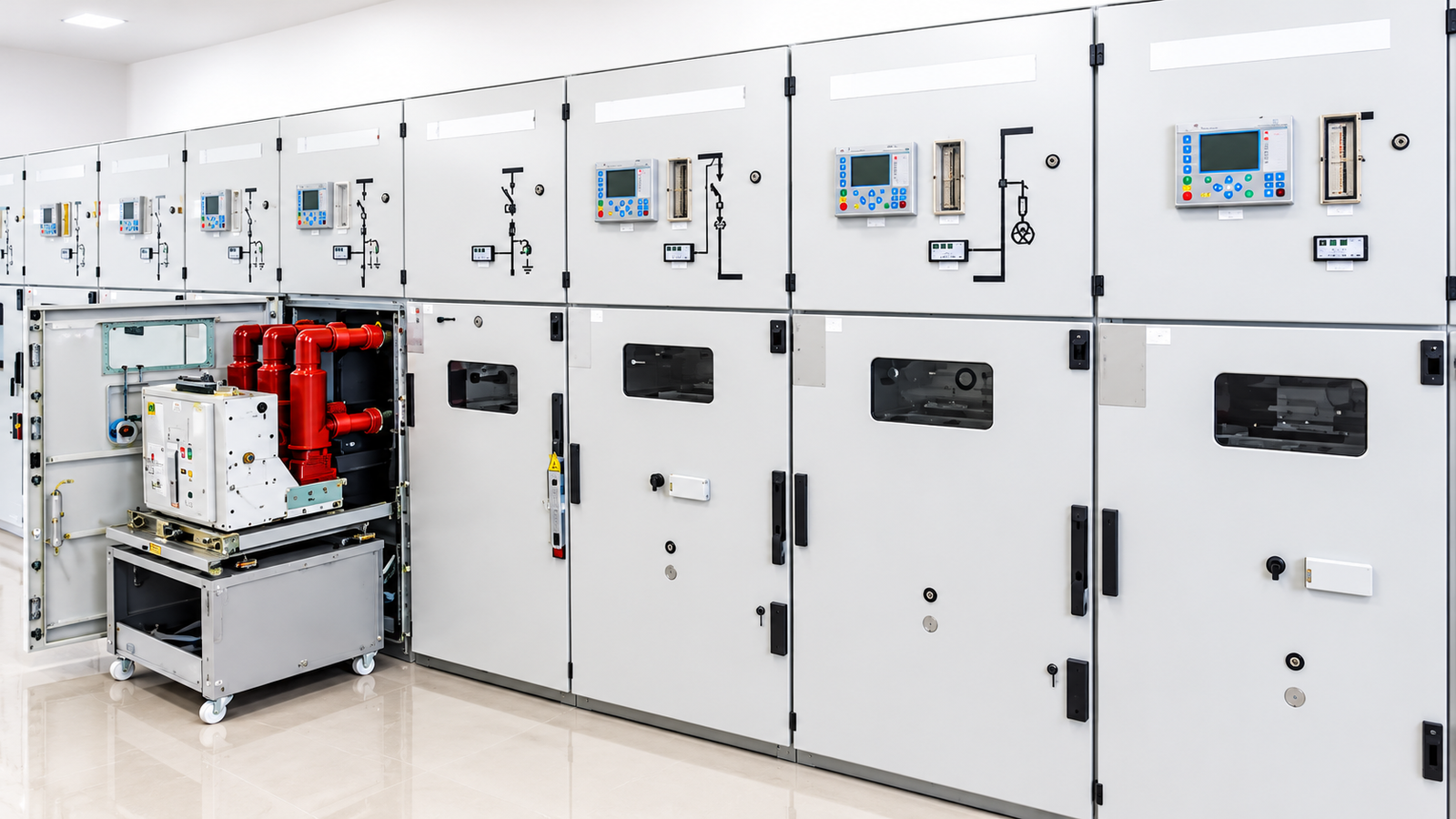
Equipment construction has a direct influence on personnel safety, accessibility and installation requirements. Medium voltage metal enclosed switchgear contains switching and protection components within grounded metal compartments.
These assemblies are used in industrial plants, commercial facilities and electrical substations. Their compartmentalised construction helps separate different functional sections, depending on the design and applicable standards.
Several factors deserve attention during equipment selection:
Voltage rating: The equipment must match the operating voltage of the electrical network. Incorrect ratings can create insulation and operational problems.
Short-circuit withstand capacity: Switchgear must withstand the electrical and mechanical stresses associated with prospective fault currents until the protective devices clear the fault.
Internal arc classification: Where specified, internal arc-resistant designs can help direct hot gases and pressure away from designated personnel areas.
Accessibility: Maintenance teams should have suitable access to inspection points, operating mechanisms and removable components.
Installation environment: Temperature, humidity, altitude, dust levels and ventilation can affect equipment performance.
Standards compliance: Equipment should meet the relevant IEC or applicable national standards, including requirements for construction, testing and operational safety.
Maintenance Practices That Help Extend Equipment Life
Electrical equipment requires regular inspection to identify deterioration before it develops into a major operational problem. Medium voltage switchgear maintenance should follow the manufacturer’s instructions, applicable safety procedures and the operating conditions of the installation.
A planned maintenance programme commonly includes the following activities:
Visual Inspections
Technicians inspect enclosures, cable connections, indicators, mechanical components and protective barriers. Signs of corrosion, overheating, physical damage or contamination require further investigation.
Contact and Connection Checks
Loose electrical connections can increase contact resistance and generate excessive heat. Appropriate inspection and testing methods help identify these conditions before they damage equipment.
Circuit Breaker Testing
Circuit breakers should be checked for correct mechanical operation, opening and closing performance, contact condition and trip functionality. Testing intervals depend on equipment type and operating history.
Insulation Testing
Insulation resistance and other suitable diagnostic tests help assess the condition of electrical insulation. Testing methods must be selected according to the equipment manufacturer’s recommendations.
Protection Relay Verification
Protective relays should be tested to confirm that their settings and operating characteristics match the protection coordination requirements of the electrical network.
Maintenance work must be carried out by qualified personnel using approved isolation, lockout and earthing procedures.
Where Enclosed Switchgear Is Commonly Installed
Enclosed switchgear is designed with electrical components housed within protective enclosures. The enclosure helps restrict accidental contact with live parts and provides protection against environmental influences, depending on its specified ingress protection rating.
It is used in several types of facilities:
- Manufacturing plants: Controls power distribution to production machinery, motors and industrial equipment.
- Commercial buildings: Supports electrical distribution across lighting, HVAC and other building services.
- Power substations: Provides switching, isolation and protection for distribution circuits.
- Data centres: Helps manage electrical supplies to critical infrastructure and backup power arrangements.
- Infrastructure facilities: Supports electrical networks in transport systems, water treatment plants and public utilities.
The enclosure material, protection rating, internal arrangement and ventilation requirements should match the installation environment.
Building a Reliable Electrical Distribution Network
Selecting appropriate switchgear requires more than comparing equipment specifications. Electrical engineers must assess load requirements, fault levels, protection coordination, available installation space and future expansion plans.
Equipment should also be compatible with the wider electrical distribution network, including transformers, cables, busbars and protection systems. Manufacturer documentation, type-test certificates and commissioning records provide useful evidence of equipment suitability.
A properly selected and maintained switchgear installation supports safe electrical operation, controlled fault isolation and dependable power distribution. Understanding equipment types, insulation technologies and maintenance requirements helps facility owners and engineers make informed decisions that support long-term electrical infrastructure performance.